client: Partijlijnen van Arcam
team: Peter van Assche, Lotte Meeuse, Tessa Paulus
Arcam, visualising politics
Arcam, visualising politics
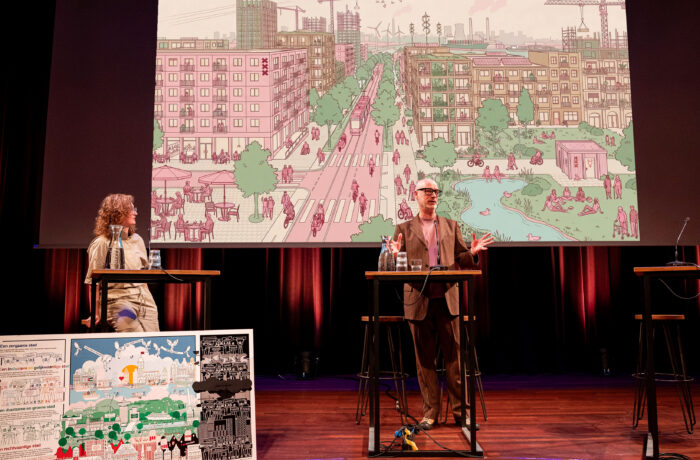
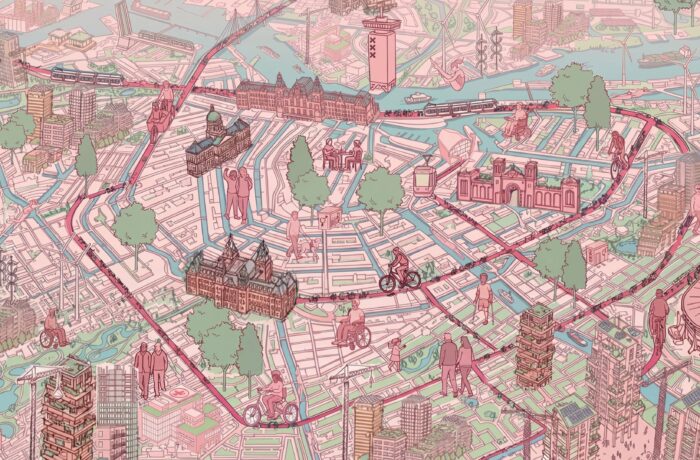
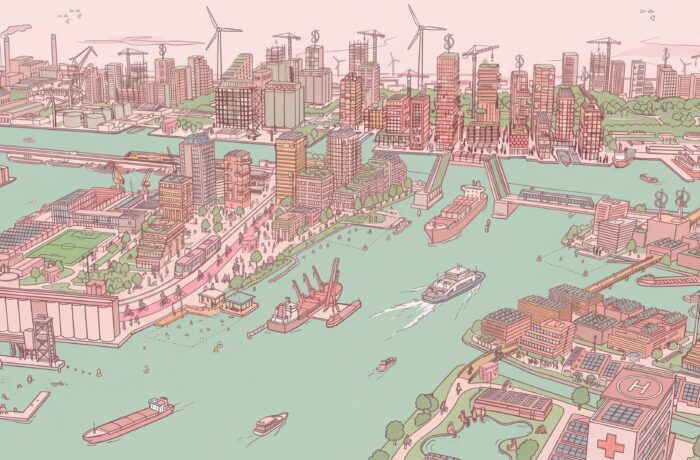
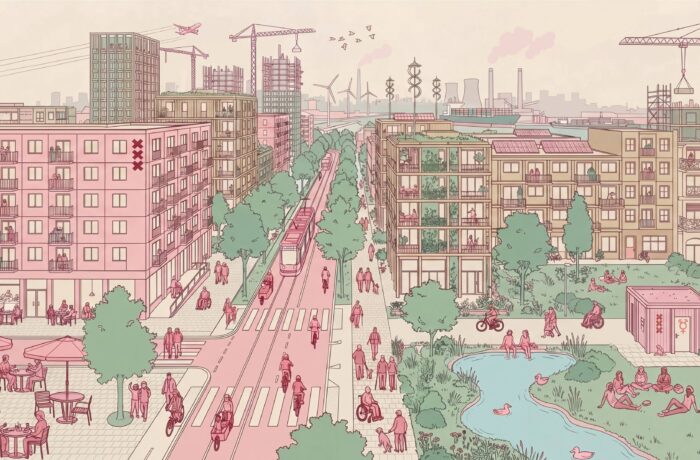
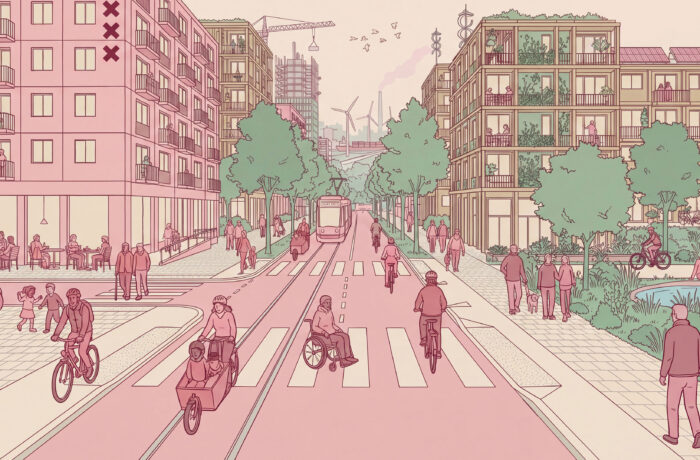
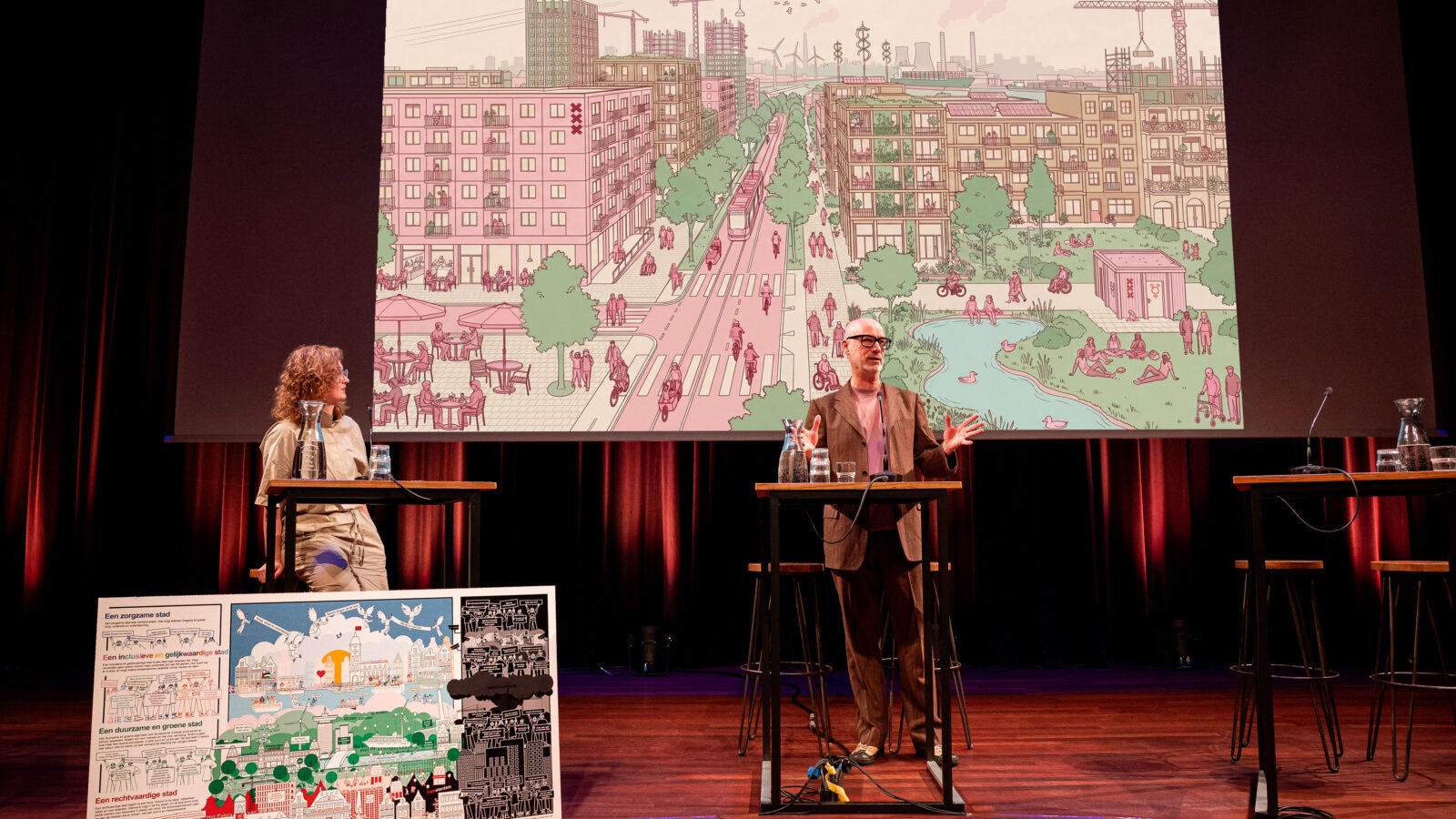
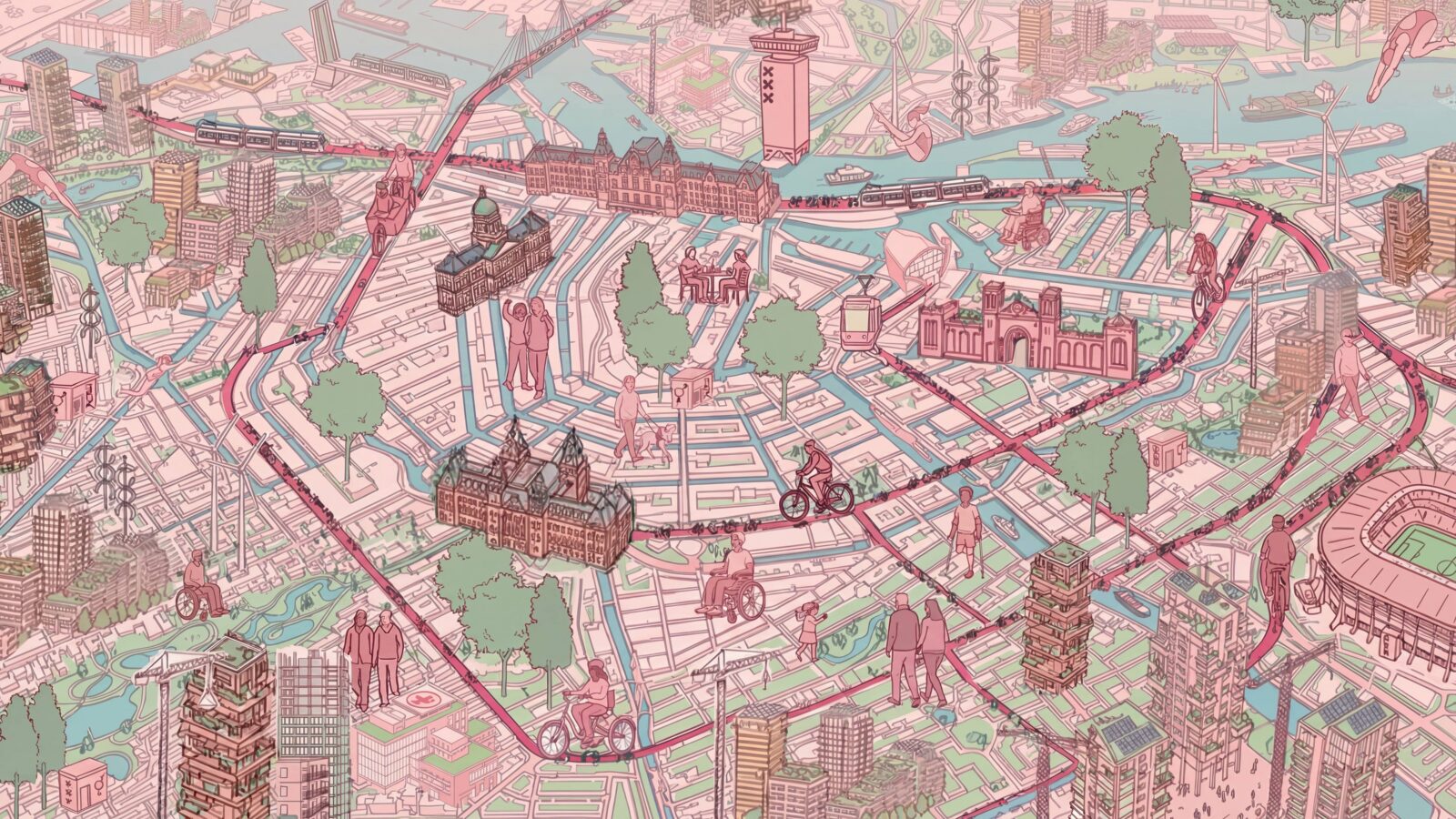
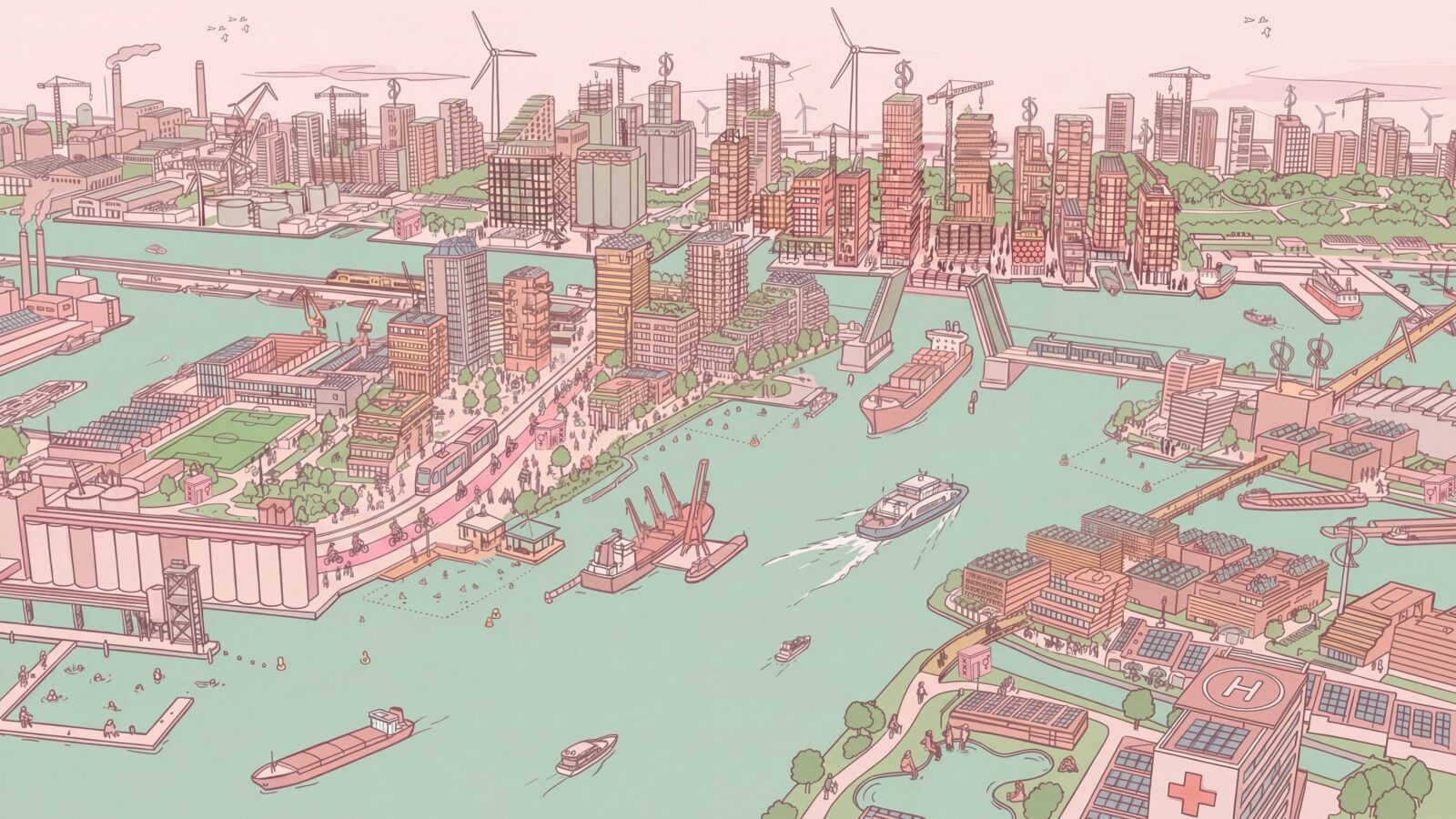
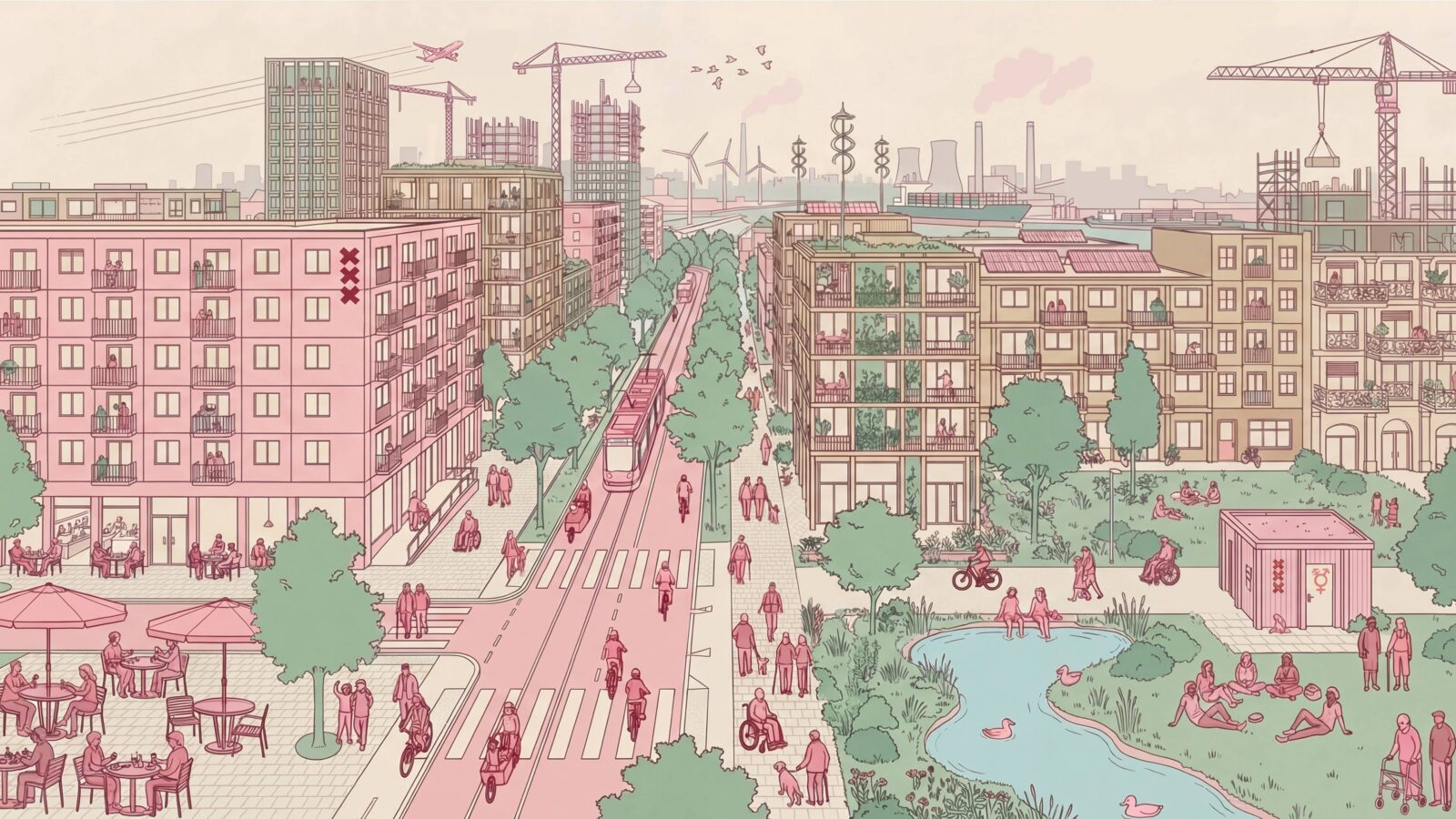
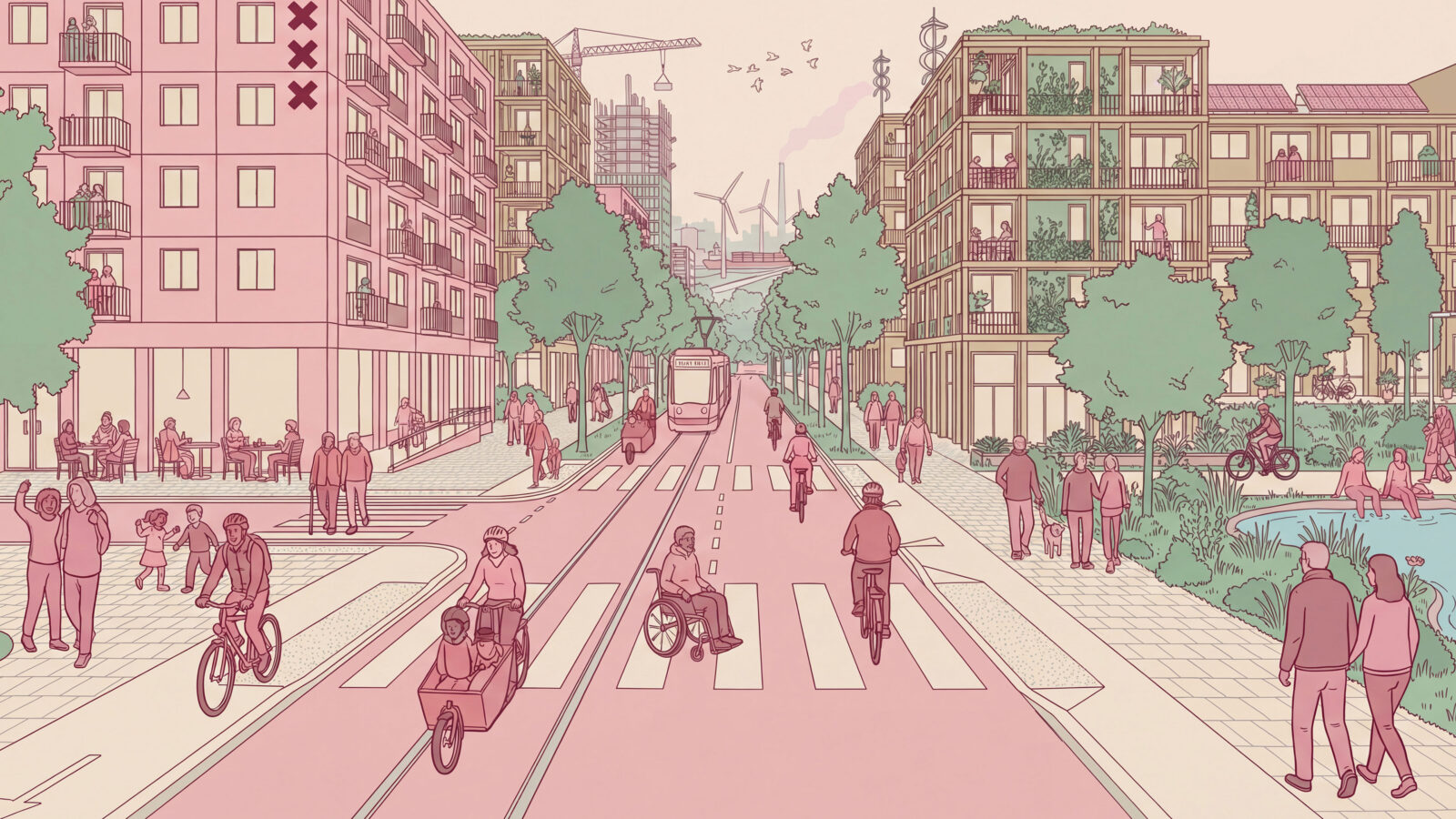
Bureau SLA was challenged to translate D66 Amsterdam’s election manifesto for the Partijlijnen van Arcam into a spatial vision for the future of Amsterdam. We distilled D66’s programme into four scales: the city, the neighbourhood, the street, and the sidewalk.
D66’s programme is, as we described it ourselves, a candy bag of contradictory optimism. We are not only going to build a great many homes, but also create new city parks and plant 25,000 trees. Awkward building regulations will be abolished, while climate-adaptive construction will become mandatory. The city must become healthy, green, accessible, and pleasantly vibrant.
In our vision, this results in a city in which Haven-Stad develops into a major growth area, where timber construction and CO2 reduction go hand in hand with greater biodiversity and water. At street level, wadis become the new asphalt, new cycling connections are added, and space is created for amenities, inclusivity, craftsmanship, experimentation, and nightlife. In short: a city in which everything can happen at once, or at least an impressive amount of it.
It was precisely this tension that made the exercise interesting. Because behind the optimism lies a serious spatial question: how do you give shape to all these ambitions at once in a real city?
Thanks to Arcam for the invitation, and to Suleyman Aslami for the conversation.
Would you like to see the presentation of Peter van Assche? Click this link.
Photo: Sanne Couprie