client: NEMO Science Museum, Amsterdam
design team: Peter van Assche, Malon Houben, Martynas Solovejus
design & realisation: 2019
structural engineer: Pagter Bouwconstructies, Heemskerk
building costs consultant: Target Bouwkostenadvies, Amsterdam
landscape design: BOOM Landscape, Amsterdam
original design: F.C. de Weger, 1966
site: Kattenburgerstraat 5, 1018 JA Amsterdam
photography: © Thijs Wolzak and © Daan van Eijndhoven
NEMO Science Museum
NEMO Science Museum
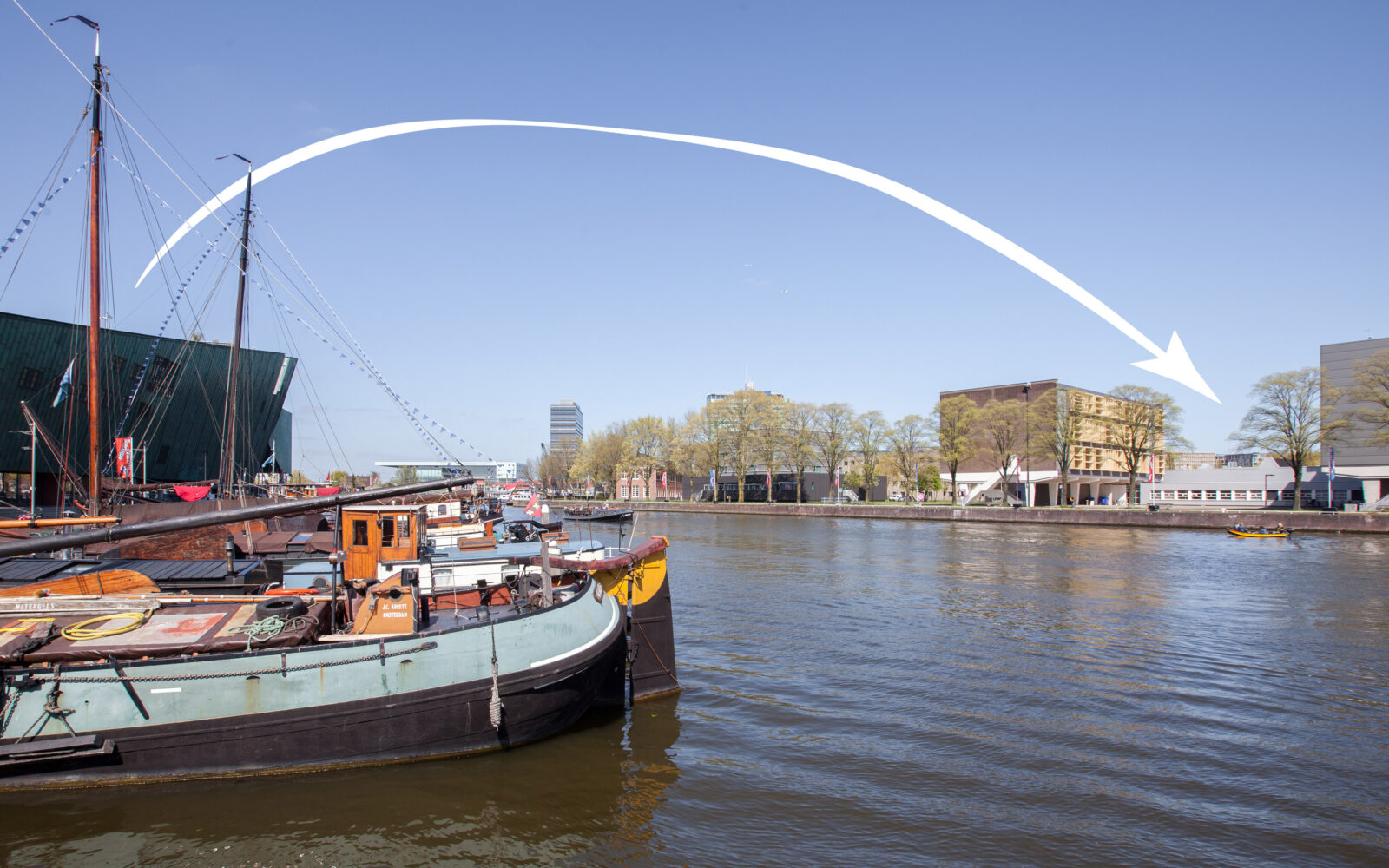
NEMO Science Museum opened in 1997 in the heart of Amsterdam. Renzo Piano designed the main building. Today, NEMO attracts hundreds of thousands of visitors, especially children and families.
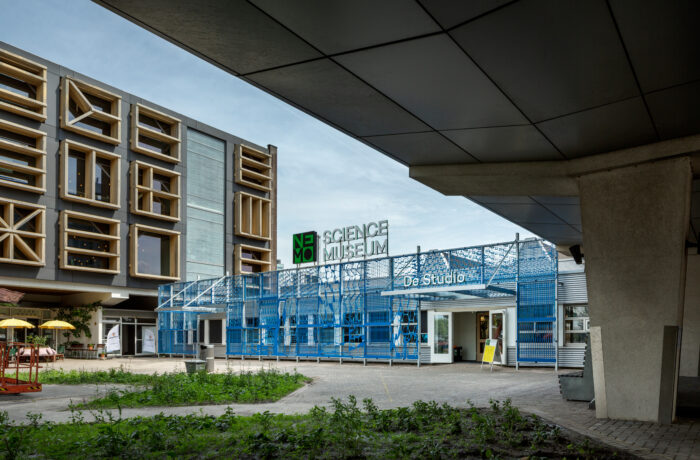
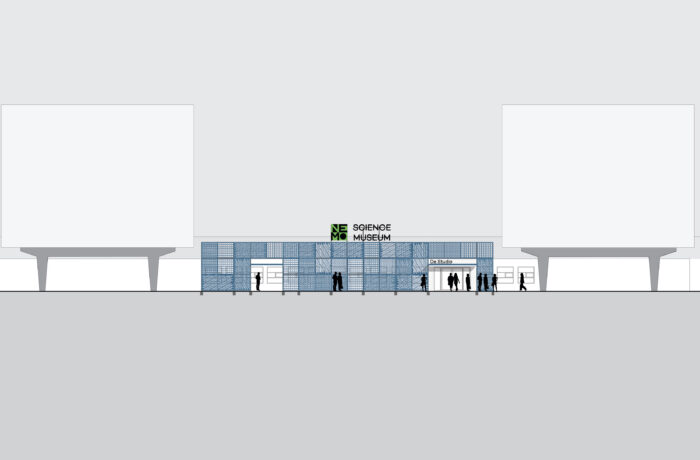
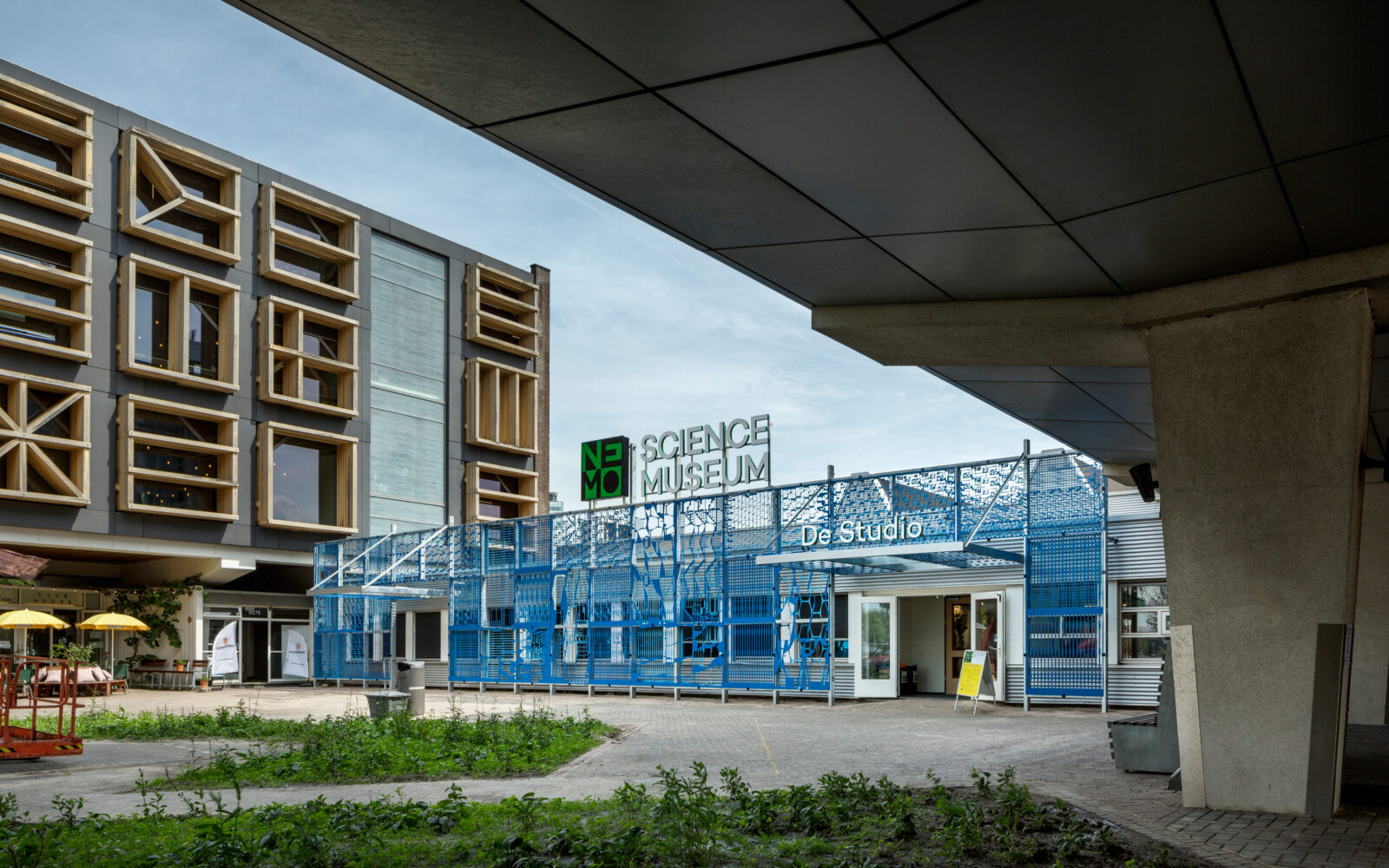
To reach a wider audience, NEMO added De Studio on the Marineterrein. This new branch acts as a laboratory for interactive exhibitions, events, and public programs. As a result, De Studio also draws adults, researchers, and innovators.
Transformation on a former military site
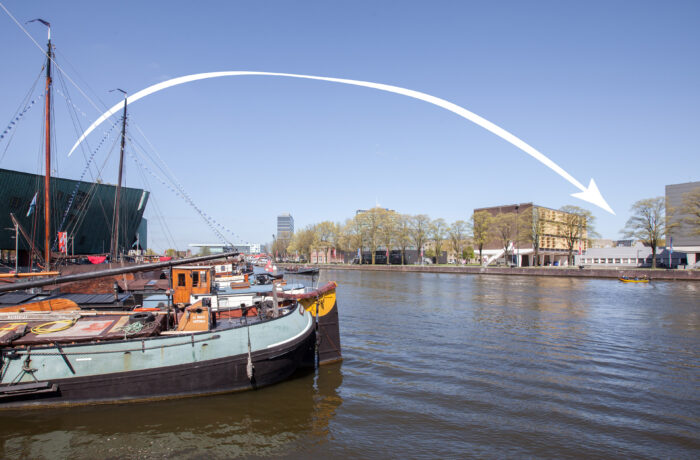
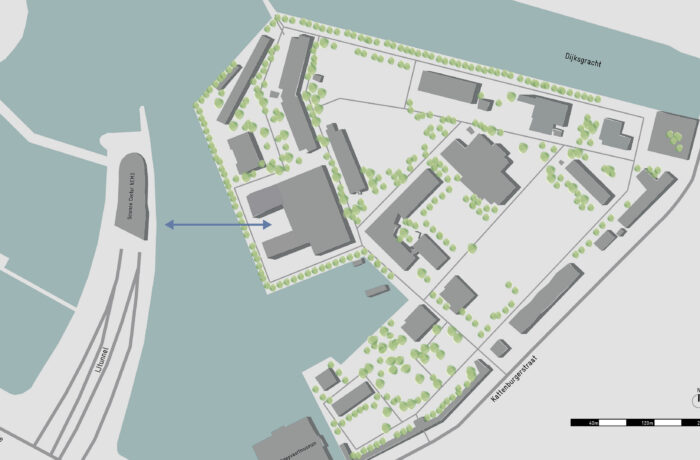
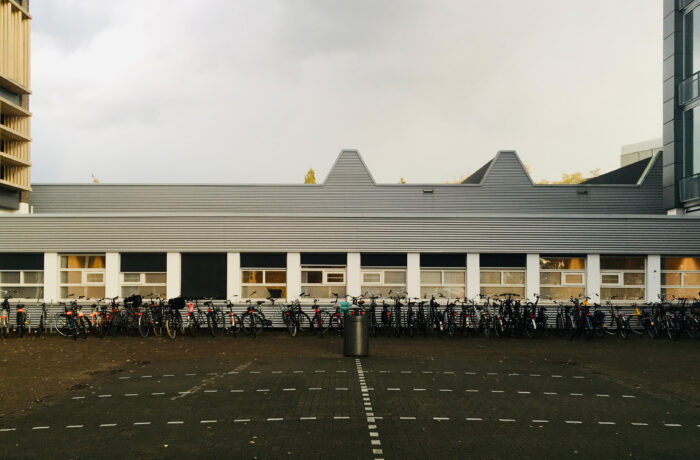
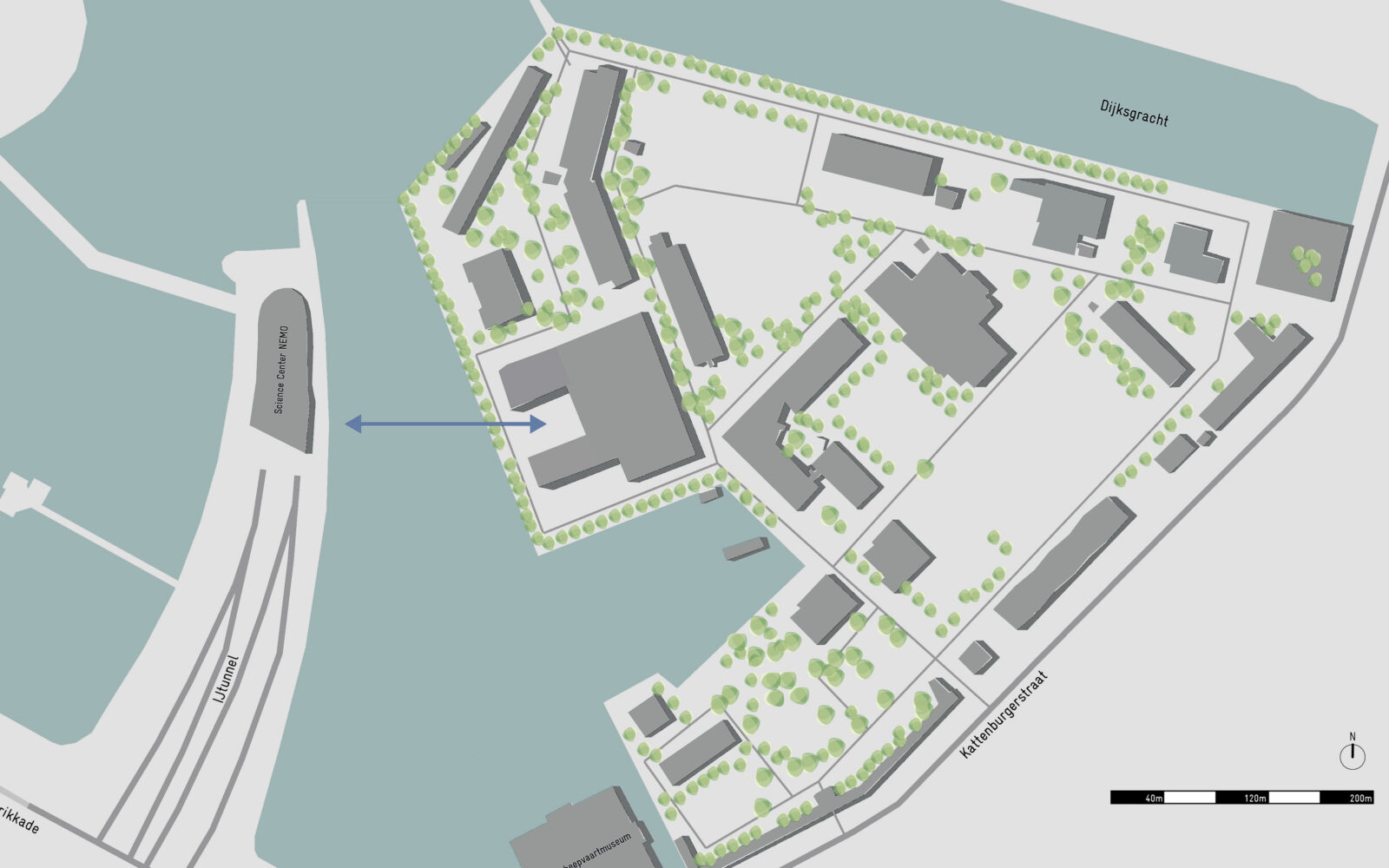
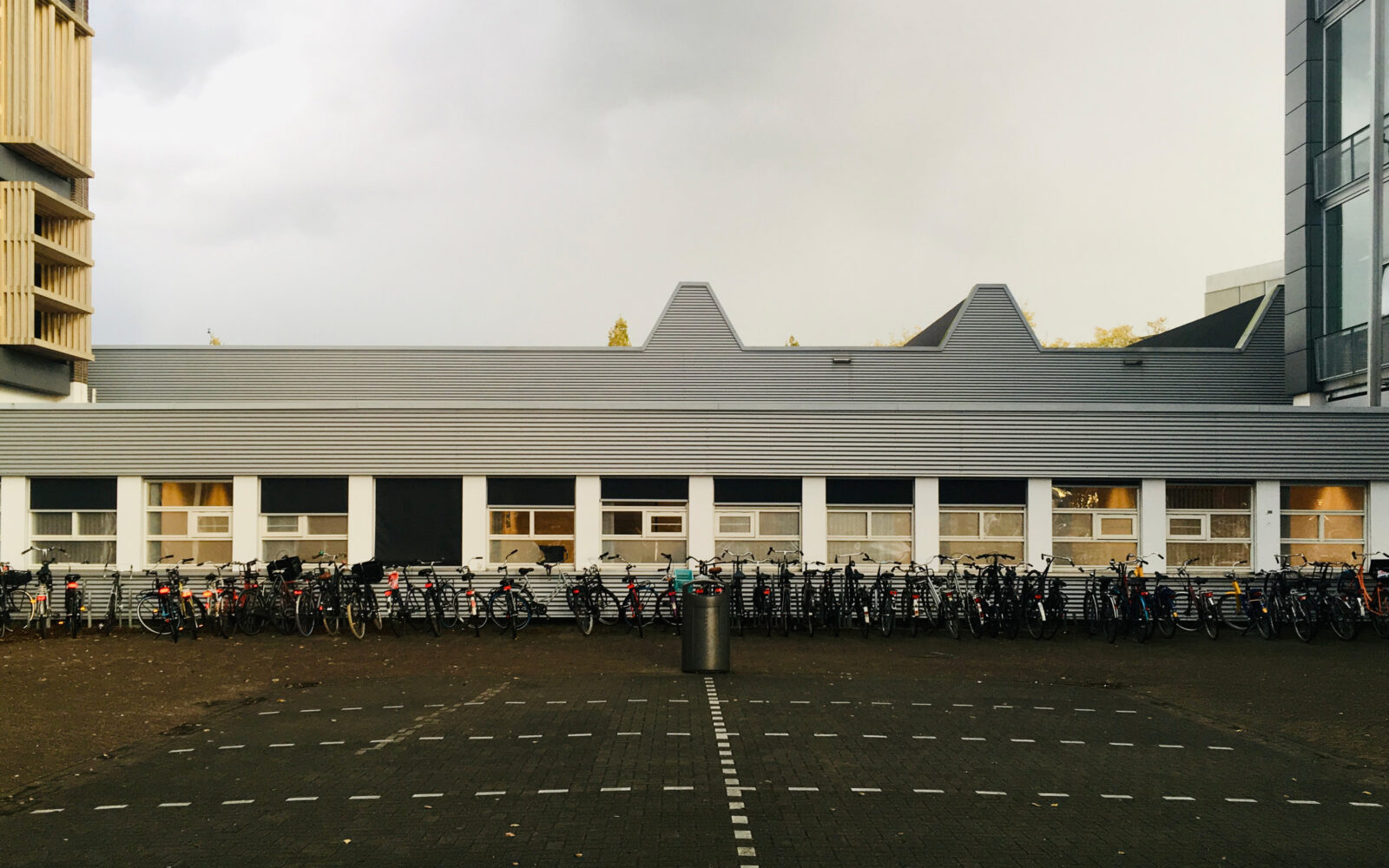
De Studio sits in a former military complex next to the museum. In 2016, bureau SLA transformed one of the former naval education buildings to host congresses and innovative startups. The building belongs to a larger ensemble from 1966 by De Weger. The ensemble also includes the low-rise former sports hall, now the De Studio lab.
Circular renovation with targeted interventions
We kept the existing building as intact as possible. However, the new use required upgrades. Therefore, we made selective structural interventions and improved the building services. Throughout the process, we chose a sustainable, circular approach. We reused and repurposed as many existing elements as we could.
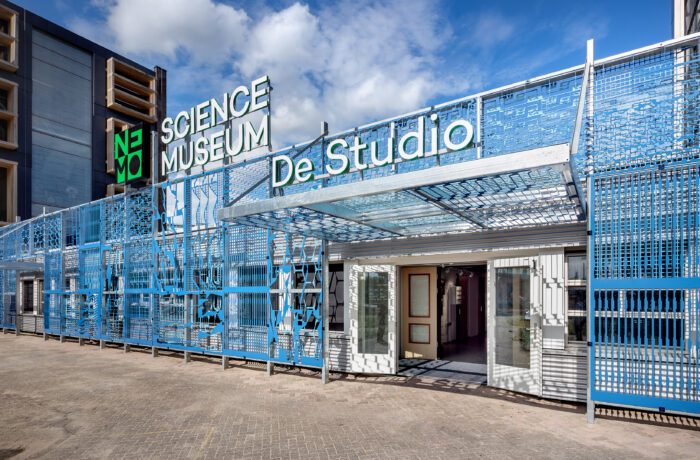
“The Studio has a spectacular circular facade made of rest materials from the car manufacturing industry”
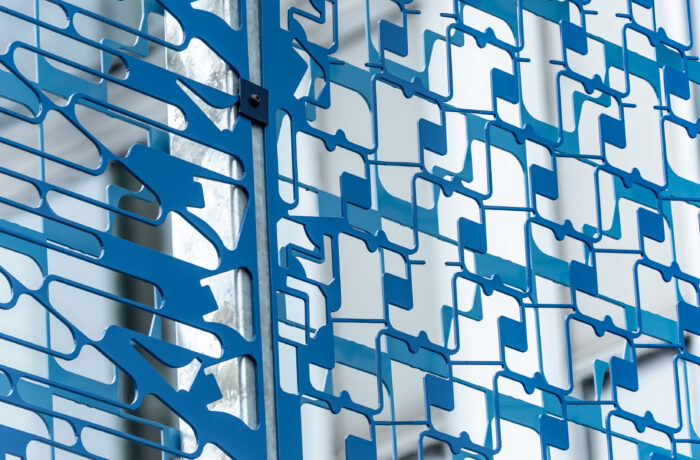
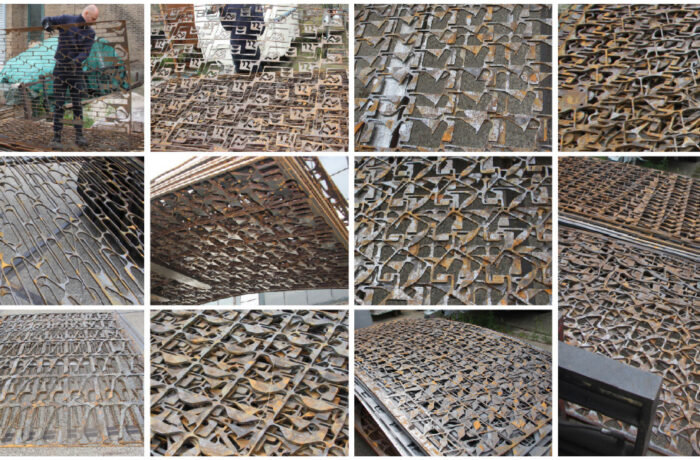
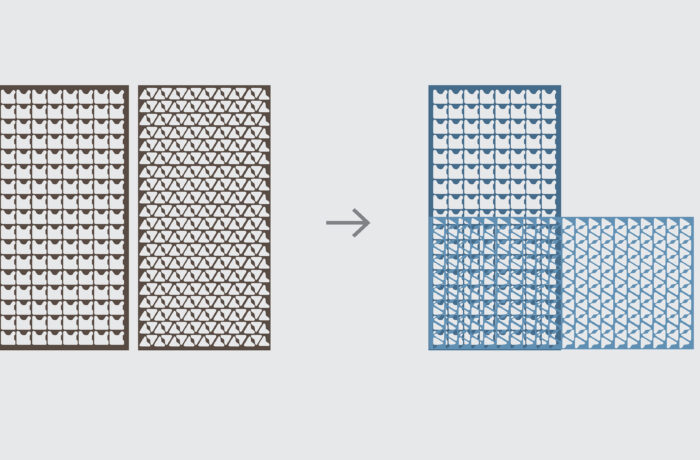
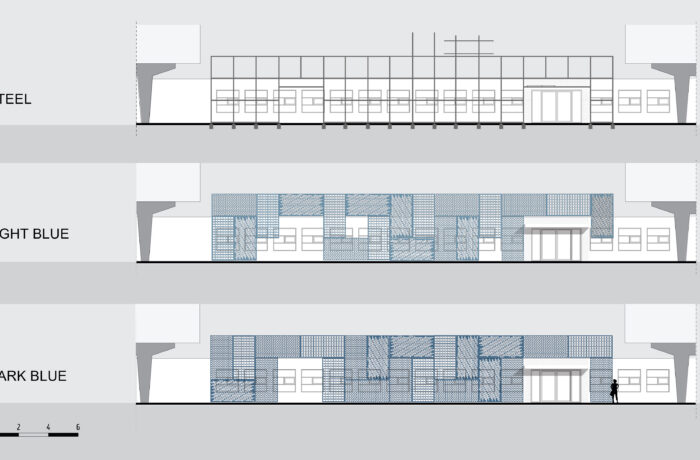
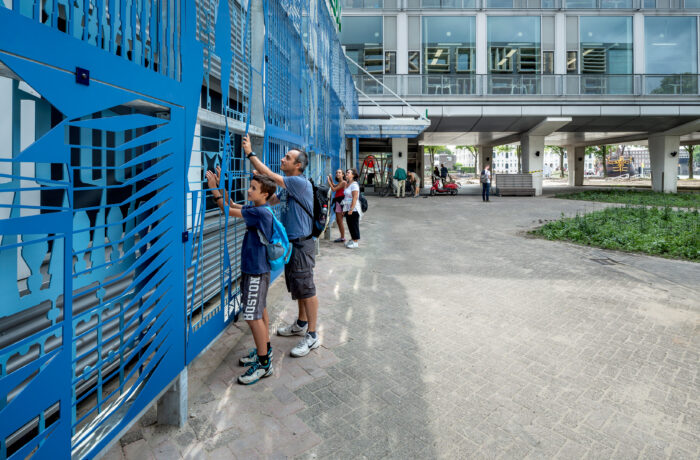
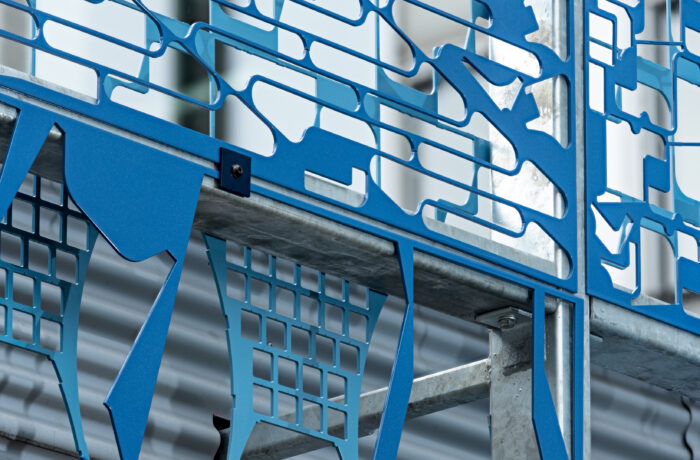
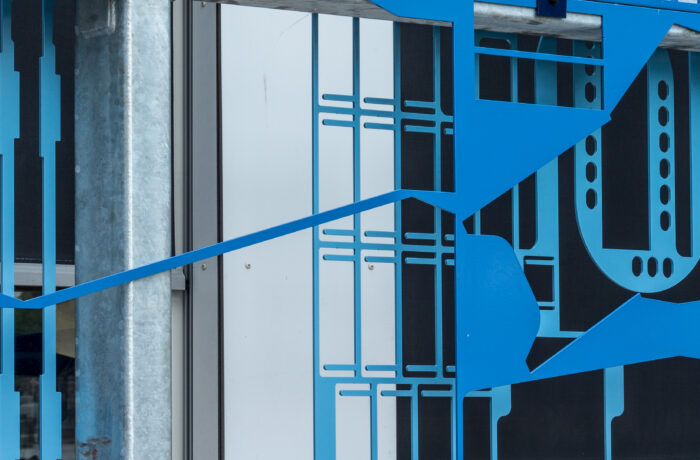
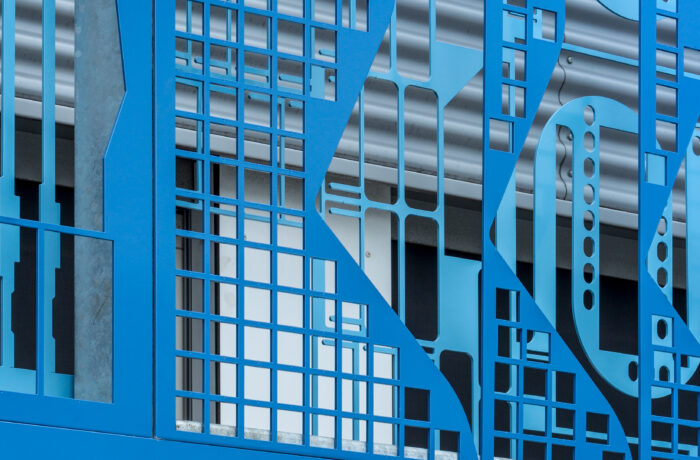
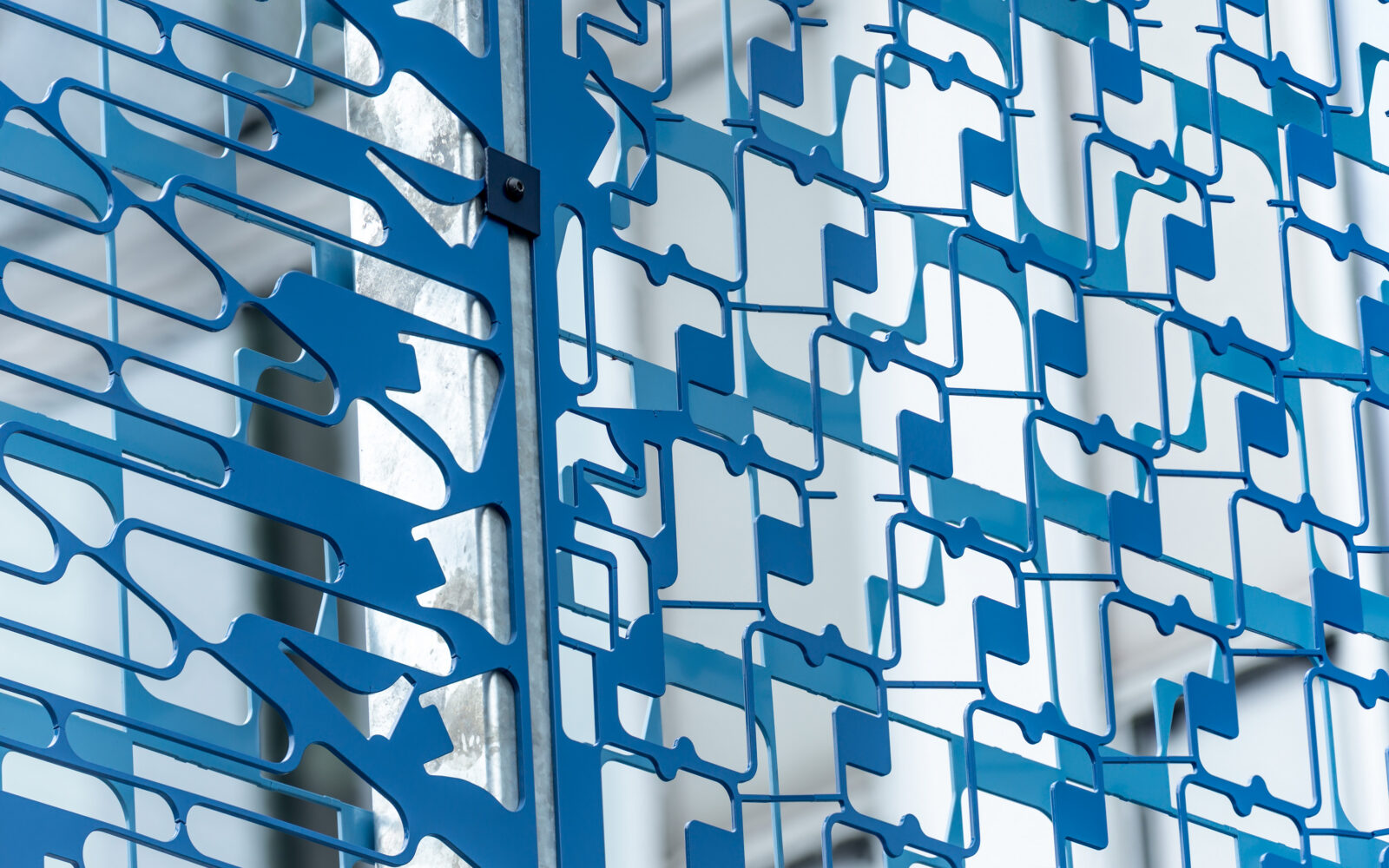
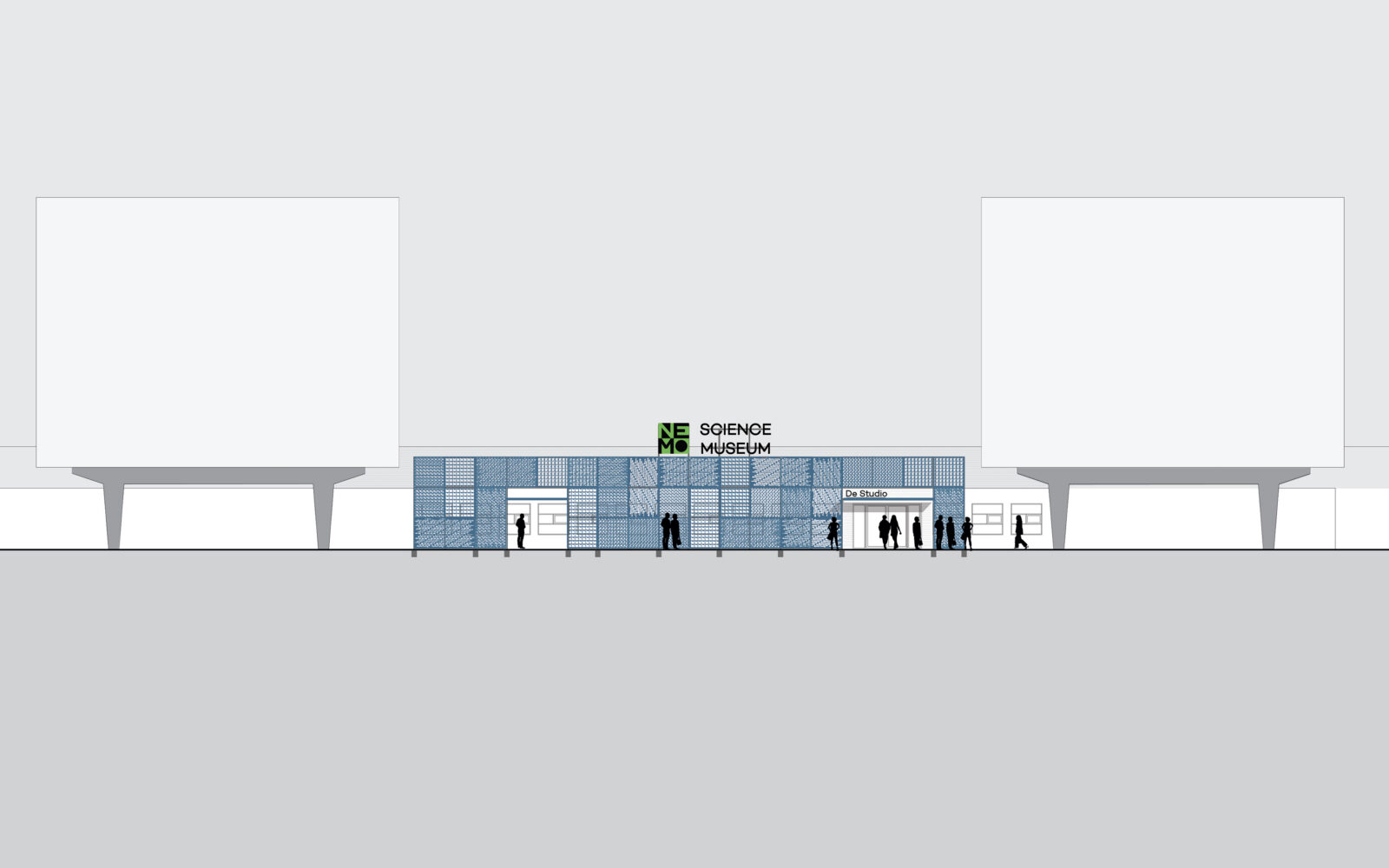
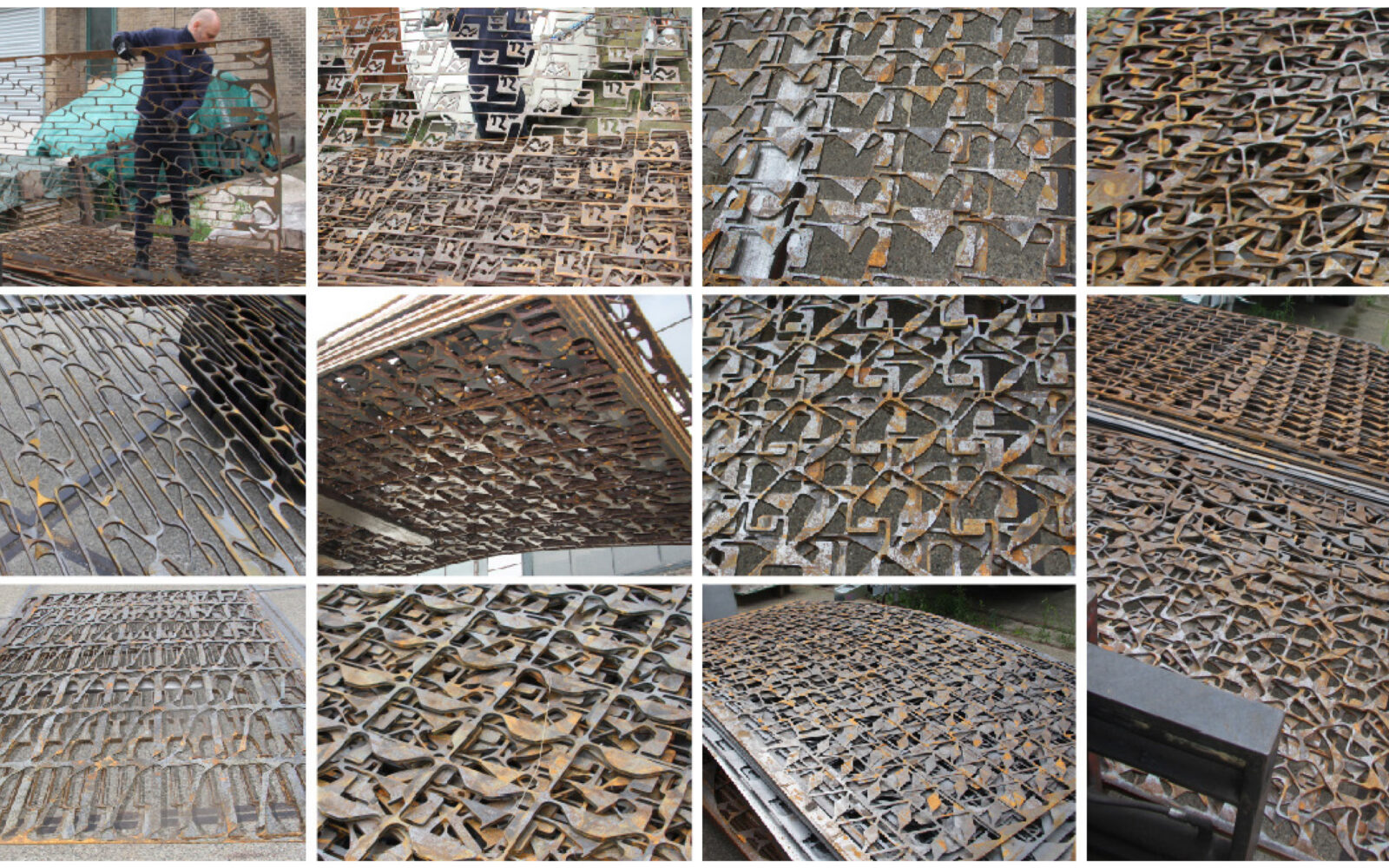
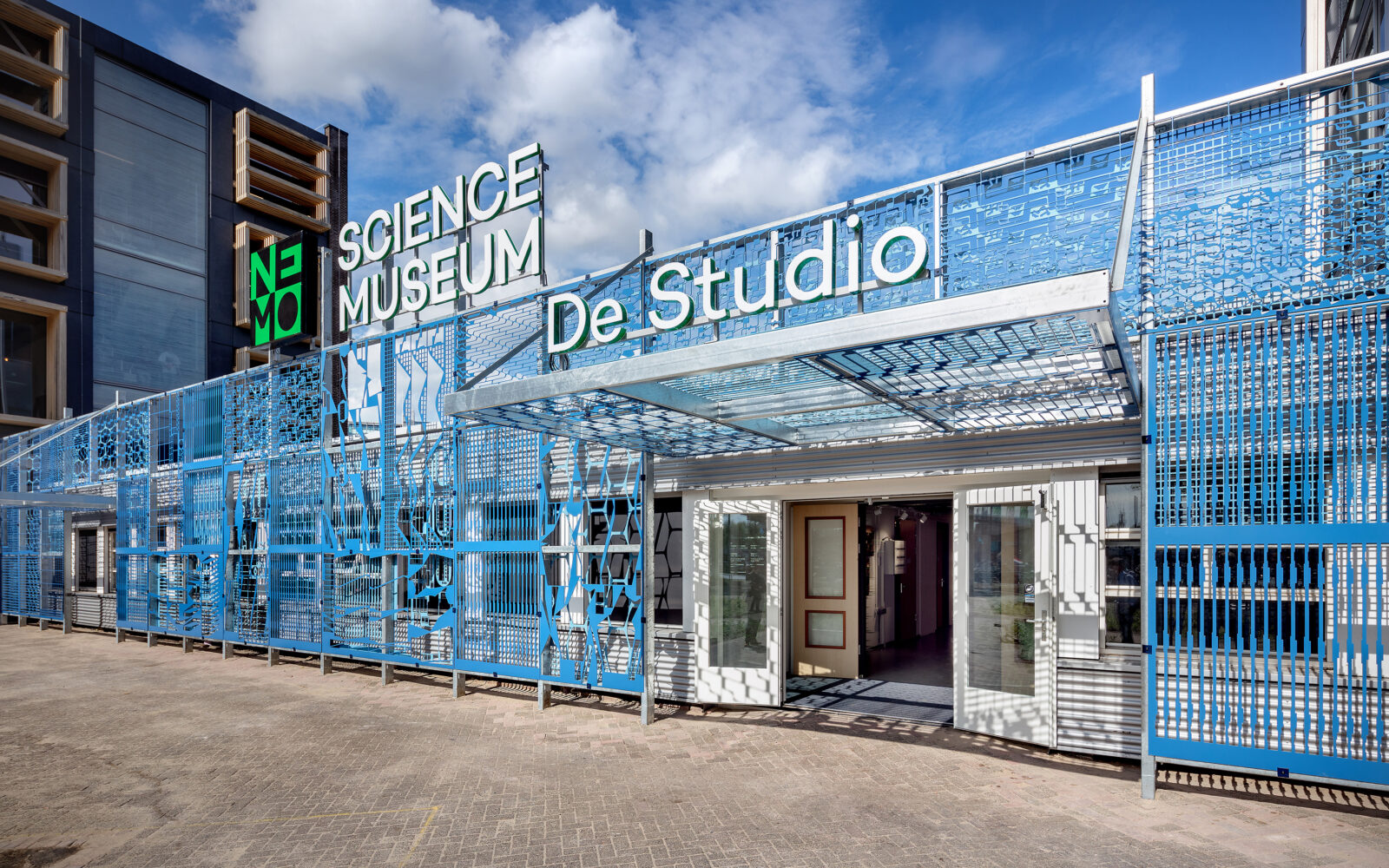
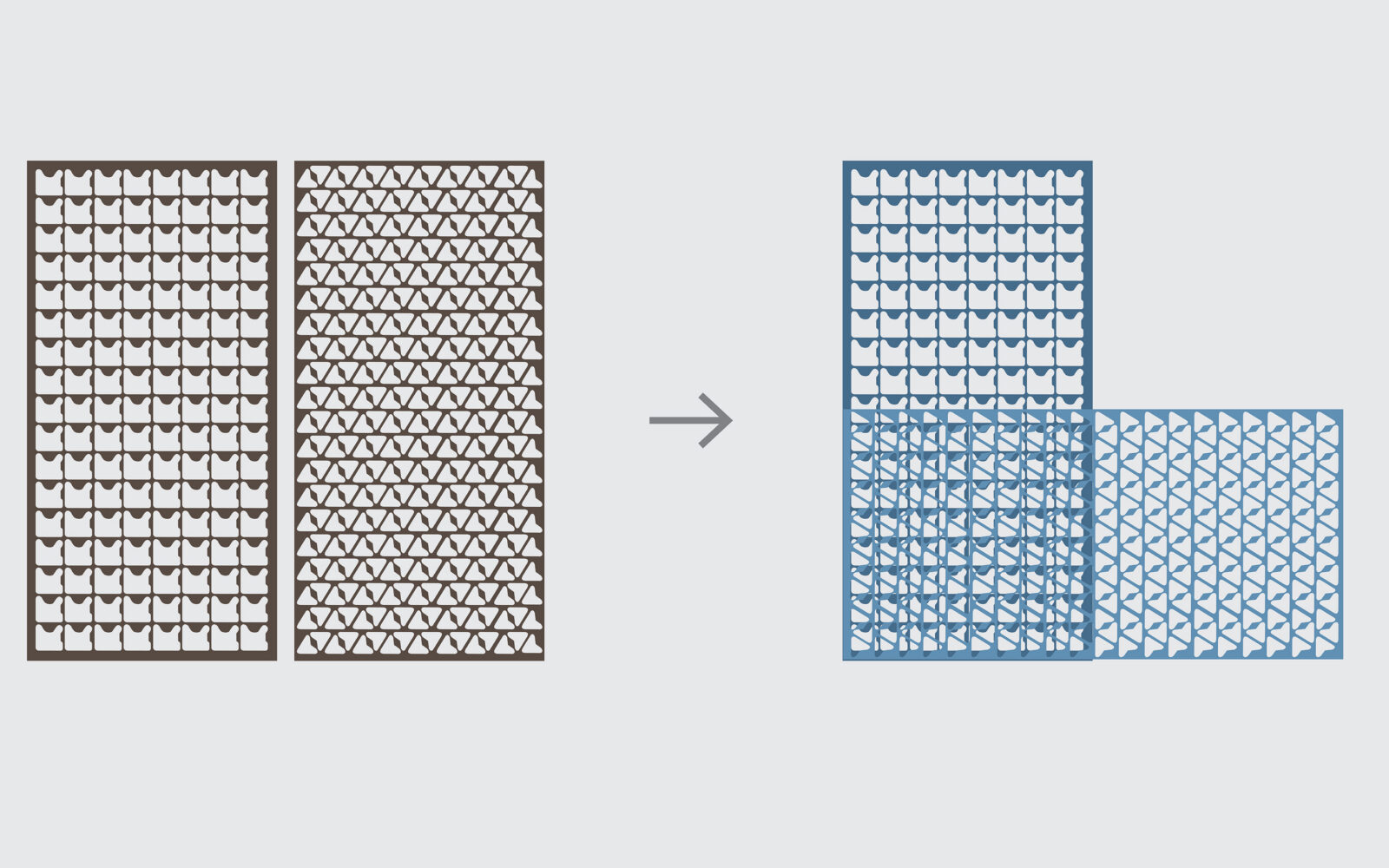
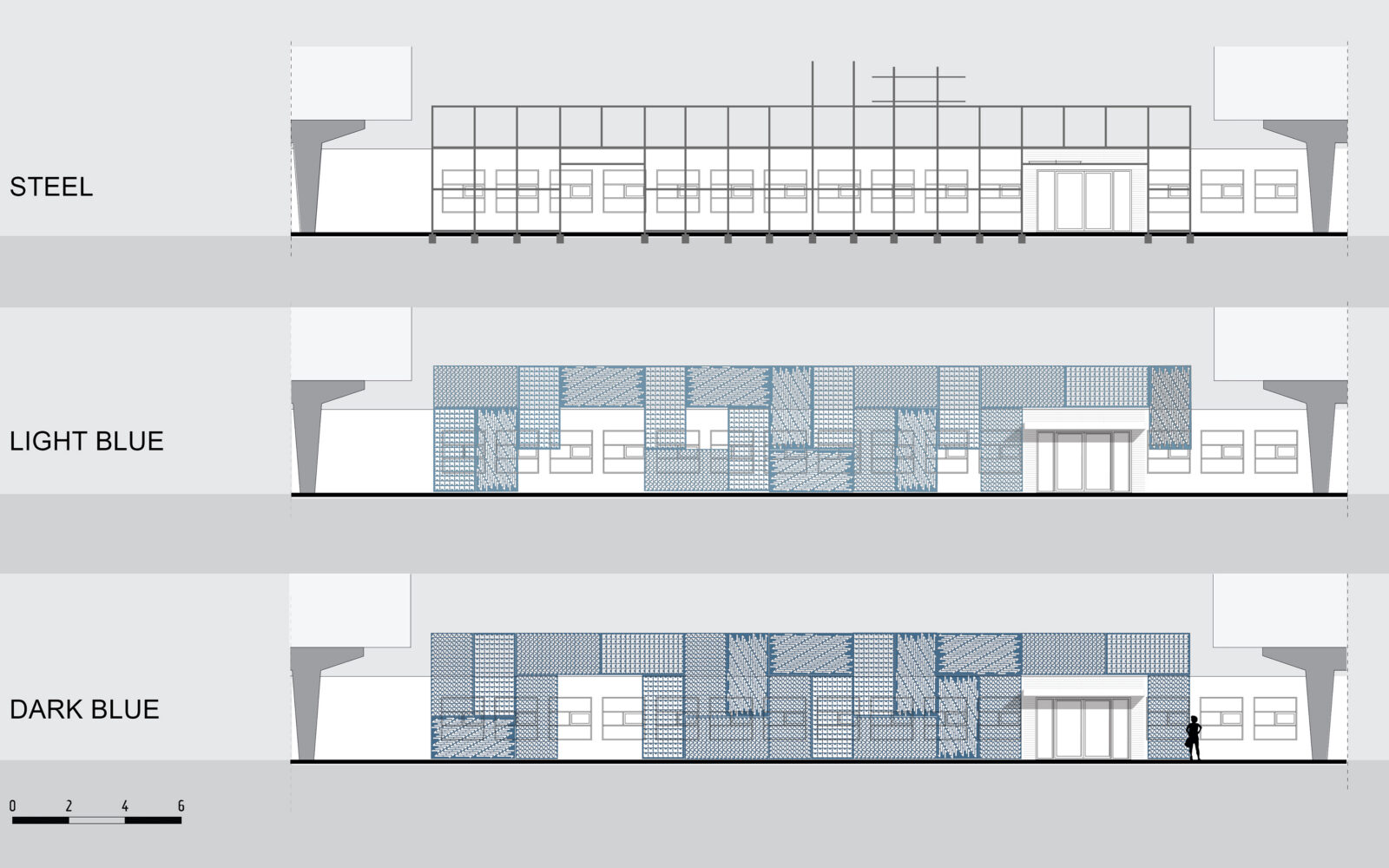
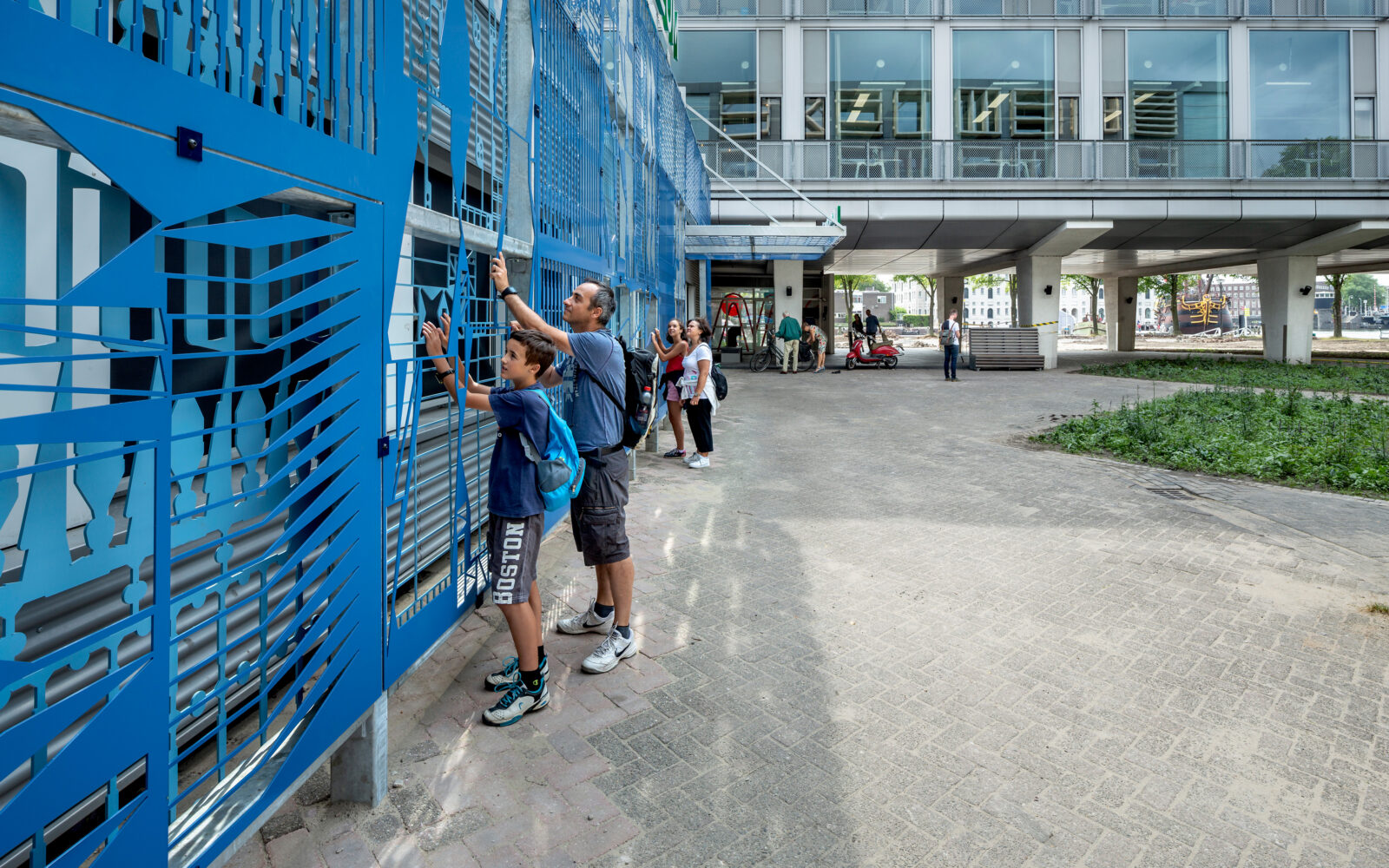
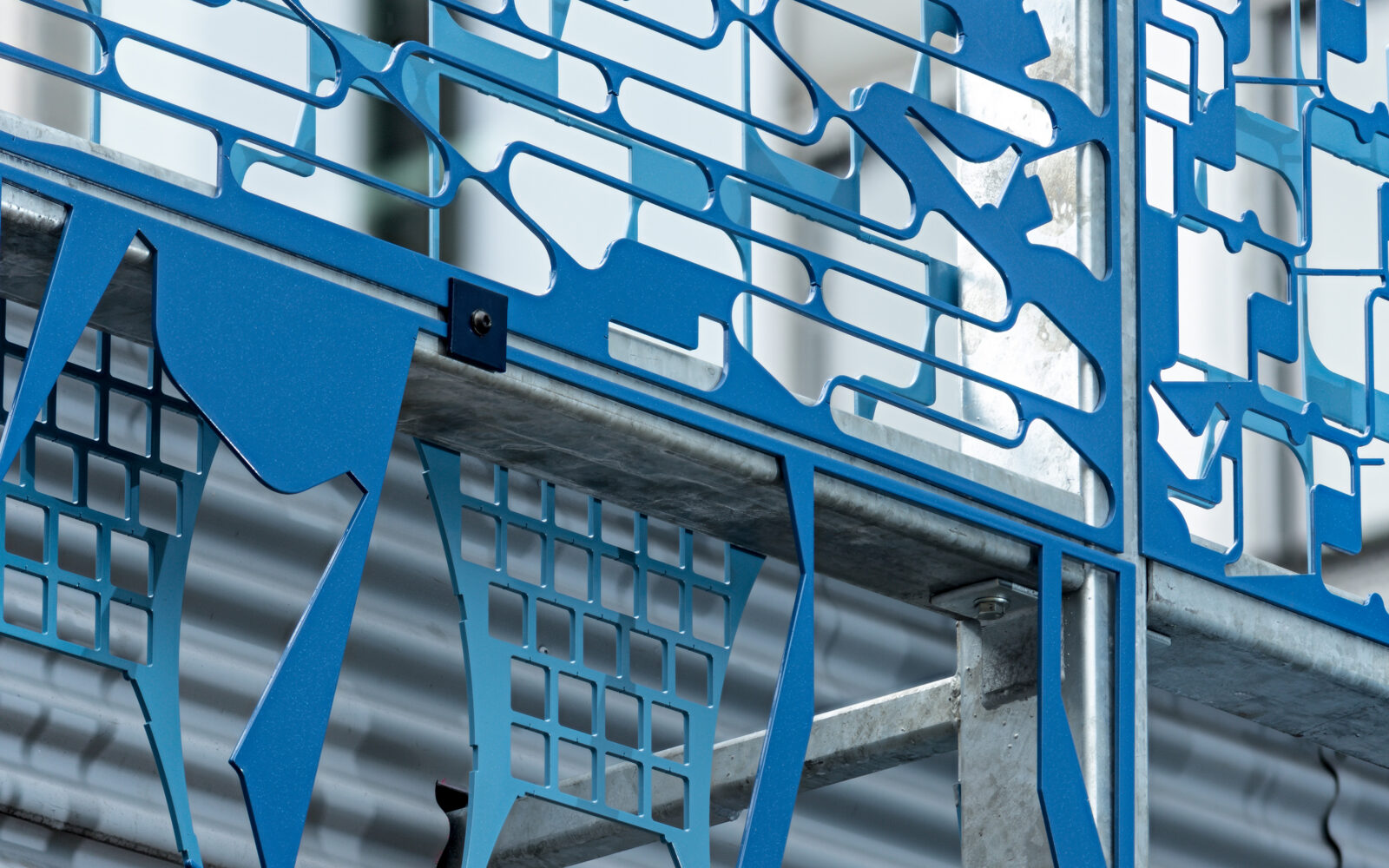
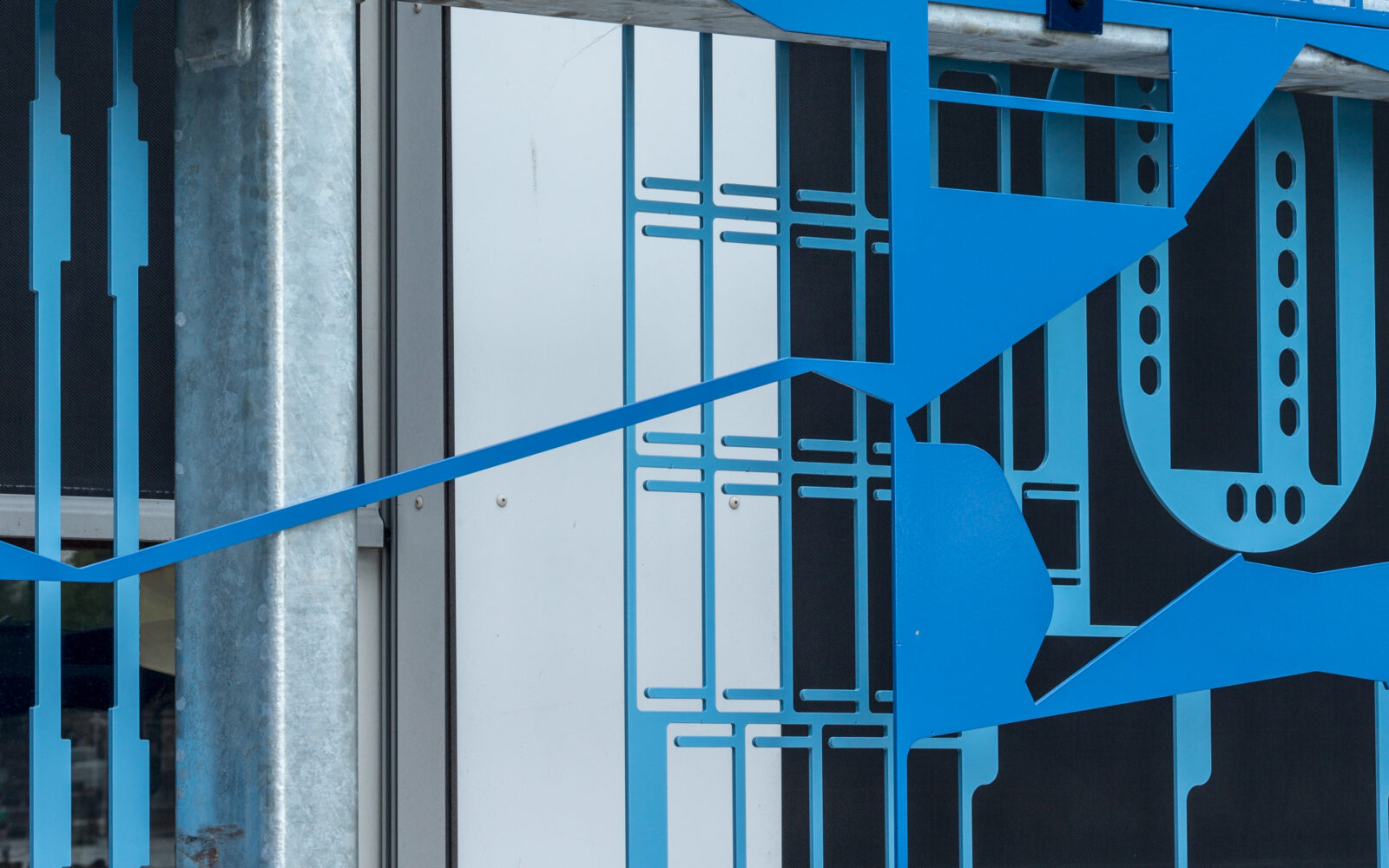
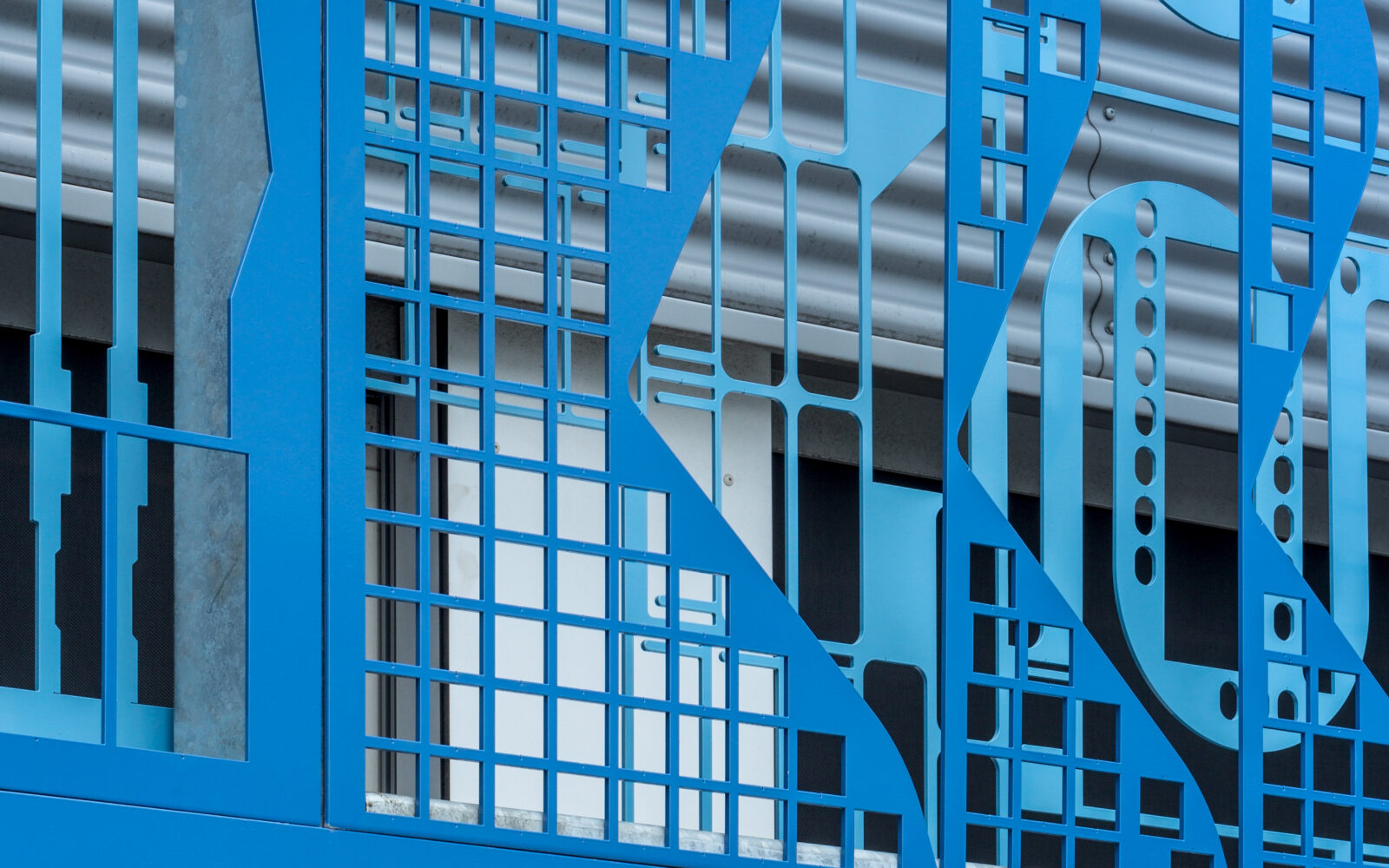
A striking feature of the building is the new facade that bureau SLA designed from residual material from the automotive industry, using Superuse Studios‘ material harvest map. The facade consists of two layers of so called contour plates. The cut shapes are used as parts for new cars. What remains is a 6 mm thick steel plate with graphic patterns. The plates are mounted behind each other and give a cheerful play of lines and patterns. Because the patterns were not known beforehand, the position of the contour plates was determined on the construction site.